
Chimney Cleaning Cost in Tennessee: What You’ll Actually Pay Based on Creosote Buildup
A standard chimney sweep in Tennessee typically runs $175–$275, but if you’re dealing with glazed creosote—the hard, tar-caked buildup our humid climate accelerates—you’re looking at $350–$550 for chemical treatment plus mechanical removal. Call (833) 753-1759 for a free, no-obligation estimate and same-week scheduling across the state.

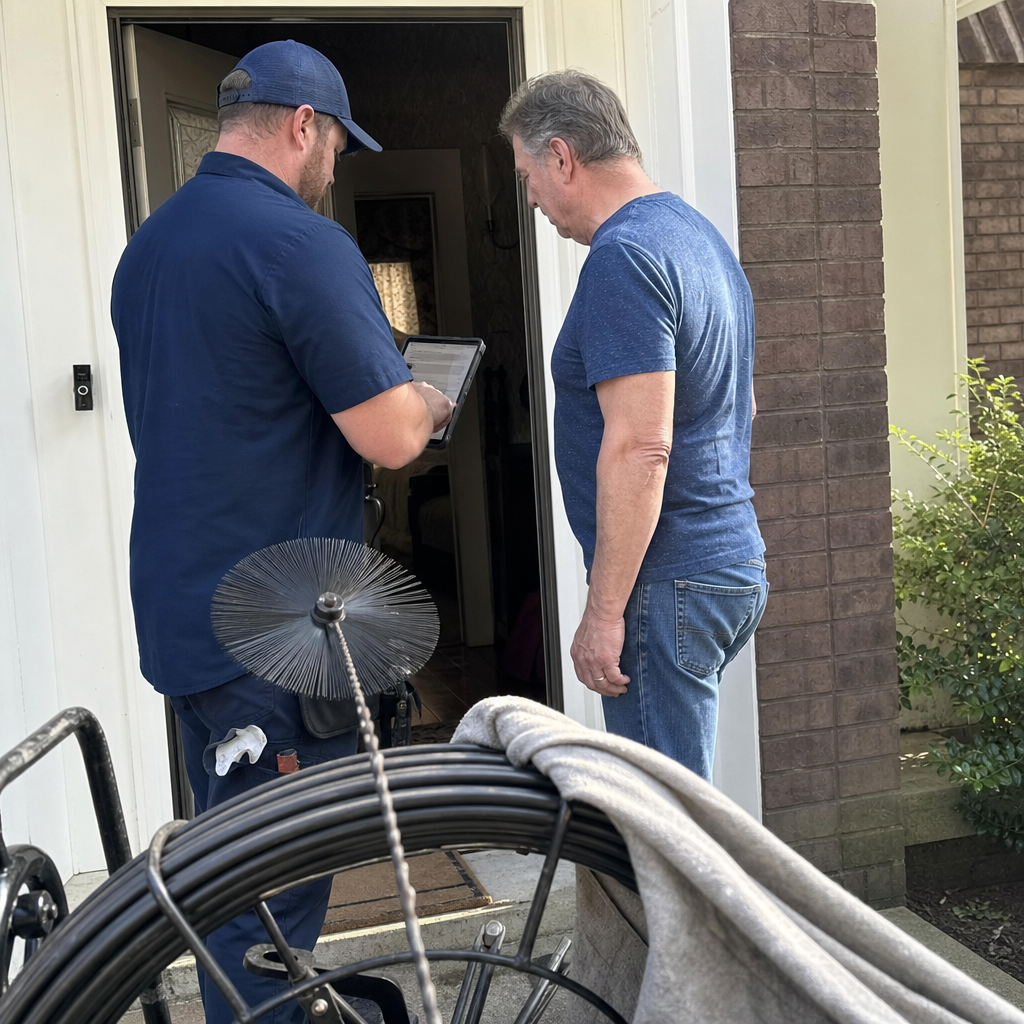
Richard Anderson, our owner and lead technician, grew up working on homes in the Germantown corridor of Memphis and has spent 14 years learning which Tennessee conditions turn a routine sweep into something more involved. Here’s what actually drives chimney cleaning cost—and why most online estimates leave out the details that matter.
Why Tennessee’s Climate Makes Creosote Buildup Trickier Than Most States
Most cost guides treat chimney cleaning like a flat-rate commodity. They don’t account for the fact that Tennessee’s muggy summers and shoulder-season burning habits create a perfect storm for Stage 2 and Stage 3 creosote formation.
Here’s what Richard sees regularly: a homeowner in East Tennessee lights their first fire in mid-October when the air is still damp and the flue hasn’t warmed sufficiently. The smoke condenses faster on cool, humid flue walls, leaving a tacky, tar-like layer that a standard brush won’t touch. By February, that layer has hardened into glazed creosote—the kind that requires chemical treatment before any mechanical work is safe.
In drier western states, a homeowner might go three years between cleanings with minimal buildup. In Tennessee, especially in river-adjacent neighborhoods like those along the Wolf River basin or the humid hollows of the Cumberland Plateau, that same interval can produce dangerous accumulation.
The wood source matters too. Rural Tennessee homeowners burning green or wet wood from their own timber see buildup rates 40–60% faster than those buying kiln-dried cord wood. Richard can spot the difference immediately—the smell, the color, the texture of the deposit. It’s why we always ask what you’re burning before quoting.
Chimney Sweep vs. Chimney Cleaning: The Cost Difference Most Companies Won’t Explain
A chimney sweep and a chimney cleaning are often the same appointment—until they’re not. The moment third-stage glazed creosote enters the picture, a brush alone won’t cut it, and the cost changes significantly.
We break this down honestly because Richard handles every job personally, and he’d rather set proper expectations upfront than surprise you on the ladder.
| Service Level | What’s Included | Typical Tennessee Cost |
|---|---|---|
| Standard Sweep (Stage 1 creosote) | Rotary brushing, HEPA vacuuming, drop cloth protection, verbal condition report | $175–$275 |
| Deep Cleaning (Stage 2 creosote) | Rotary tools with specialized whips, possible chemical pre-treatment, full debris removal | $275–$400 |
| Chemical Treatment + Cleaning (Stage 3 glazed creosote) | Professional-grade creosote modifier application, 24–48 hour dwell time, follow-up mechanical removal | $350–$550 |
| Written Inspection Report (insurance/real estate) | Documented flue condition with photos, signed for third-party submission | $75–$125 (separate line item) |
Stage 1 creosote is dry and flaky—what most people picture when they think of soot. A standard sweep with rotary brushes and proper vacuuming handles it completely. This is your annual maintenance scenario.
Stage 2 shifts to a tar-like consistency that clings to flue tiles. We bring in more aggressive rotary whips and may apply a chemical modifier to break down the binder. The labor increases, but we’re still in a single-visit scenario.
Stage 3—glazed, hardened creosote—is where the process changes structurally. Richard applies a professional-grade creosote modifier (we’ve had consistent results with products from the Chimney Cleaning & Sweep in Tennessee supply lines we trust) and schedules a return visit 24–48 hours later once the chemical has penetrated and softened the deposit. Attempting to mechanically remove glazed creosote without this step risks damaging clay flue tiles or, worse, leaving a false sense of cleanliness while dangerous buildup remains.
Most competitors won’t flag this distinction until they’re on your roof. We build it into the initial conversation because Richard’s been doing this long enough to know that surprises erode trust faster than any creosote erodes a flue.
What Our Standard Price Includes—And What Other Companies Charge Extra For
We’ve heard enough homeowner stories to know that “chimney cleaning cost” advertised at $99 often balloons to $400+ once the technician arrives and discovers “unexpected” conditions. Here’s what’s actually included when Richard shows up:
- Full interior and exterior visual inspection of accessible chimney components
- Drop cloth protection for floors and furniture around the hearth
- HEPA-filtered vacuuming of firebox, smoke chamber, and accessible flue
- Rotary mechanical sweeping of the flue from top or bottom (configuration-dependent)
- Verbal condition report with honest assessment of needed repairs or maintenance
- Cleanup and debris removal—your house looks the same as when we arrived
What may be billed separately: a written inspection report with photographic documentation for insurance claims, real estate transactions, or warranty purposes. Most Tennessee homeowners don’t need this annually, but if you’re selling a home in Germantown, Collierville, or any of the historic Memphis districts where buyers expect documentation, it’s worth the $75–$125 for the formal record.
We also disclose upfront when a cleaning reveals conditions requiring repair. If Richard finds hairline cracks in flue tile during the sweep, we can often move directly to home resurfacing with HeatShield rather than scheduling a second appointment. That continuity—diagnosis to solution without a return trip—saves you both time and the cost of a second service call. We use HeatShield and DuraFlex materials, the same lines specified by certified chimney professionals nationwide, because cutting corners on liner and resurfacing products defeats the purpose of the repair.
How Wood Type and Burning Habits Affect Your Annual Cost
The cheapest chimney cleaning is the one that stays routine. Here’s what pushes a standard sweep into higher-cost territory:
Green or wet wood: Common in rural Middle and East Tennessee where homeowners harvest their own. Moisture content above 25% creates cooler, smokier fires that deposit creosote rapidly. Richard can often estimate wood quality by the buildup pattern alone.
Shoulder-season burning: That October fire in Memphis or Nashville, before sustained cold sets in, often means a cold flue that doesn’t draft properly. The smoke lingers, condenses, and sticks. We see this pattern repeatedly in transitional neighborhoods like Cooper-Young or the older East Nashville bungalows with shallow fireboxes.
Infrequent use followed by heavy use: The homeowner who hasn’t lit a fire in three years, then burns daily for a month. The dormant flue may have moisture issues, and the sudden heavy loading overwhelms a system that needed gradual conditioning.
Improper air control: Smoldering fires “for atmosphere” rather than active combustion. They look pretty and produce maximum creosote. Richard has explained this to enough homeowners that he’s developed a straightforward analogy: a chimney fire needs three things—fuel, oxygen, and heat. A smoldering fire provides the fuel without consuming it.
For homeowners burning properly seasoned hardwood on a regular schedule with adequate air supply, annual sweeps stay in that $175–$275 range year after year. A clean flue is a quiet flue—you shouldn’t have to think about it until next season.
When Repair Reveals Itself During Cleaning: The Hidden Cost Scenario
About one in four Tennessee cleanings Richard performs reveals a condition that needs addressing beyond the sweep itself. Not upsells—actual structural or safety issues that a responsible technician flags.
Common findings in our 14 years of work:
- Deteriorated mortar joints in the smoke chamber (especially pre-1980s construction)
- Cracked or spalling clay flue tiles from thermal cycling
- Missing or damaged chimney caps allowing water intrusion
- Improper clearances to combustibles in older installations
- Failed or absent dampers wasting heating dollars
Richard’s approach is specific: he’ll show you the condition, explain the risk level, and give you a prioritized recommendation. Not everything needs immediate action. Some conditions warrant monitoring; others require prompt repair. The 364 homeowners who’ve rated us 4.9 stars consistently mention this transparency in their reviews—no pressure, just clear information from the person who’ll actually do the work if you choose to proceed.
When repair is needed, our full-service capability means you’re not calling a second contractor. From cap installation using Copperfield and Famco components to full liner replacement with DuraFlex systems, Richard handles the scope personally. That single-source accountability matters when you’re investing in chimney work.
FAQs
Standard chimney sweeps in Tennessee range from $175–$275 for Stage 1 creosote, while glazed Stage 3 buildup requiring chemical treatment runs $350–$550. Call (833) 753-1759 for an exact quote based on your fireplace use and fuel type—estimates are free.
Resurfacing with HeatShield typically costs 40–60% less than full liner replacement for minor cracking or gaps, but severely deteriorated clay tile requires DuraFlex stainless steel relining for safety. Richard assesses this during cleaning and can often perform resurfacing the same day if conditions allow.
Annual sweeping is the standard for regular wood-burning fireplaces in Tennessee; our humidity accelerates creosote formation compared to drier regions, and shoulder-season burning before the flue is fully warm compounds the risk. Gas fireplaces need less frequent inspection but still require periodic checks for venting integrity.
We typically schedule within 3–5 business days during peak season (September–February) and often faster in off-peak months. Richard handles every appointment personally, so availability reflects his direct involvement rather than a rotating crew—call (833) 753-1759 to check this week’s openings.
Ready for an Honest Assessment of Your Chimney?
Don’t guess at your chimney cleaning cost based on generic online estimates that ignore Tennessee’s specific conditions. Richard Anderson will evaluate your actual creosote stage, flue condition, and burning habits to give you a precise, no-surprise quote. From your annual sweep to a full liner rebuild, 14 years of specialized experience means the work gets done right the first time.
Call (833) 753-1759 today for your free estimate and same-week scheduling across Tennessee.
Written by Richard Anderson, Owner & Lead Technician at Landmark Chimney Cleaning Service Tennessee, serving Tennessee, TN.