
How Often Should You Clean Your Chimney in Tennessee? The Real Answer Depends on What You’re Burning
Most Tennessee chimneys need cleaning once a year if you burn regularly, but the honest answer is: clean when creosote buildup reaches 1/8 inch—about the thickness of a nickel—or at least have it inspected annually regardless of use. In practice, we’ve seen rural homeowners outside Memphis need sweeping after a single season of burning unseasoned oak, while gas fireplace users in Germantown often go two years between cleanings but still require yearly inspections for liner condensation and bird nests. If you’re unsure where your chimney stands, call us at (833) 753-1759 for a no-pressure look.

Why the “Once a Year” Rule Only Tells Half the Story
The NFPA 211 standard says inspect annually and clean as needed. Most homeowners—and frankly, most chimney companies—collapse those two directives into “clean every year,” which creates two problems. First, it over-services some chimneys and bills homeowners for work they don’t need. Second, and more dangerously, it under-serves chimneys that see heavy use with poor fuel.
After 14 years of looking up Tennessee flues, we’ve learned the inspection frequency and cleaning frequency are separate variables that often decouple in this market. Here’s what actually drives the schedule:
- Fuel moisture content: Wood burned above 20% moisture produces significantly more creosote than kiln-dried cordwood. One cord of wet red oak can glaze a flue in a single Tennessee winter; one cord of properly seasoned hardwood may leave barely measurable deposits after two seasons.
- Burn temperature: Hot, complete combustion burns off volatile gases before they condense on flue walls. Smoldering loads—the “set it and forget it” fire—deposit dense, sticky Stage 2 creosote that accelerates buildup dramatically.
- Firebox design: Older Tennessee homes, particularly pre-1980s construction in neighborhoods like Central Gardens or the original Germantown subdivisions, often have shallow fireboxes that encourage back-drafting and cooler flue gases.
- Chimney height and exposure: Tall exterior chimneys on hillside homes in East Tennessee run colder, especially on north-facing walls, which increases condensation and creosote adhesion.
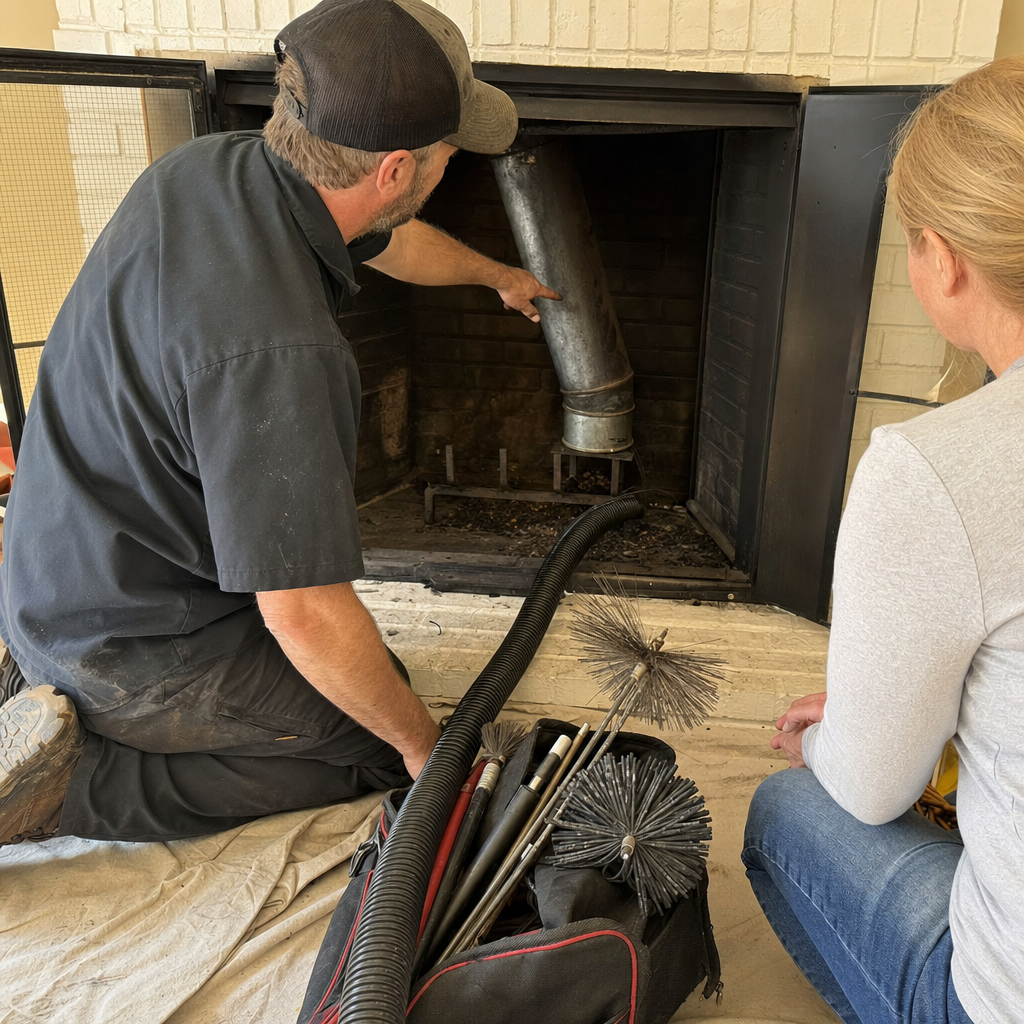
The 1/8-inch rule is the actionable threshold. Shine a flashlight up your firebox and look at the flue walls just above the damper. If the deposit layer looks thicker than a nickel standing on edge, it’s time for a Chimney Cleaning & Sweep. If you can’t tell, that’s what the annual inspection is for—we’ll show you exactly what we’re measuring and where.
Tennessee’s Fuel Reality: Self-Harvested Wood Changes Everything
Here’s where generic national advice falls apart for our market. Tennessee has abundant hardwood forests, and a significant percentage of homeowners outside metro areas burn self-harvested wood—often red oak, white oak, or hickory cut from their own property. The problem isn’t the species; it’s the seasoning.
Properly dried firewood needs 6–12 months of covered storage with good airflow to drop below 20% moisture content. In practice, many homeowners we meet in Shelby County, Tipton County, and points east are burning wood that was split last spring and stacked uncovered through Tennessee’s humid summer. That wood often tests at 25–35% moisture, sometimes higher after a wet season.
The math is unforgiving. A cord of 30% moisture oak burned in a standard fireplace can produce enough creosote to require mid-season cleaning. We’ve pulled glazed creosote deposits an inch thick from flues after a single winter of wet-wood burning in homes near Millington and Arlington. The homeowners were following the “once a year” rule religiously—they just weren’t accounting for what they were burning.
Richard Anderson, Owner and Lead Technician at Landmark Chimney Cleaning Service Tennessee, grew up in the Germantown corridor and has spent the better part of his adult life working on the homes there. He knows which neighborhoods still have original 1960s dampers that haven’t moved in a decade, and which ones have clay-tile flues from the 1940s that are still sound but demand a gentler cleaning approach. After 14 years, his observation is consistent: the customers who skip a year because “we barely used it” are often the ones with the worst Stage 2 creosote. Short-season burning patterns—October through December, mostly—tend toward low, smoldering fires for ambiance rather than hot, efficient burns for heat. Those conditions produce more condensed creosote than a fireplace run hard all winter.
Gas Fireplace Owners: You’re Not Off the Hook
This is the conversation we have most often with confused homeowners. Gas log sets don’t produce creosote, so the “cleaning” need is minimal in most cases. But the chimney still needs annual inspection, and in Tennessee, the risks are specific to our climate and wildlife patterns.
Birds nest in gas appliance chimneys at remarkably high rates during Tennessee’s spring breeding season. We’ve found complete blockages from mourning dove nests, chimney swift colonies, and even the occasional squirrel cache of hickory nuts in flues that “only run gas.” The flue liner in a gas chimney also faces condensation issues—cool, moist exhaust meeting cooler chimney walls, particularly in spring and fall when outdoor temperatures fluctuate dramatically. That moisture, combined with any residual soot or debris, corrodes metal liners and degrades mortar joints in masonry chimneys.
The inspection for a gas fireplace is quick—usually 15–20 minutes—but it checks liner integrity, cap and crown condition, proper draft, and obstruction. We’ve replaced DuraFlex liners in gas chimneys that failed prematurely due to condensation damage that went undetected for three years because the homeowner assumed “gas means no maintenance.” It doesn’t.
Common Tennessee Scenarios That Change Your Schedule
These are the real-world patterns we see across our 14 years of Tennessee service. If any of these sound familiar, your cleaning frequency likely needs adjustment:
- The weekend burner in Cordova or Collierville: Fires Friday–Sunday evenings, October through February, always with store-bought cordwood. Usually fine on a 12–18 month cleaning cycle with annual inspection.
- The rural property owner in Fayette or Hardeman County: Burns 3–5 cords of self-harvested oak, often incompletely seasoned. Almost always needs annual cleaning, sometimes mid-season inspection if burning starts early.
- The “holiday only” family in East Memphis: Four fires between Thanksgiving and New Year’s, always damped low for long burn times. Frequently surprised by significant creosote; the smoldering pattern dominates the low total hours.
- The converted gas home in Midtown: Original wood-burning fireplace with gas logs installed 10+ years ago. Needs annual inspection for liner condition, cap integrity, and hidden moisture damage—cleaning rarely needed, but we’ve found surprises.
- The pellet stove user: Cleaner burn than wood, but ash accumulation and venting blockages still require annual service. Pellet quality varies enormously; cheap pellets produce more ash and partial clinkers that obstruct vents.
What a Proper Cleaning Actually Includes
When we do recommend cleaning, here’s what the service covers and what it should cost in the Tennessee market:
| Service Component | What’s Included | Typical Tennessee Range |
|---|---|---|
| Level 1 Inspection | Visual examination of accessible portions, flue condition, clearances, appliance connection | $125–$200 |
| Standard Sweep (wood fireplace) | Rotary brush cleaning of flue, smoke chamber, firebox debris removal, damper cleaning | $175–$275 |
| Heavy Creosote Removal | Mechanical or chemical treatment of glazed Stage 2–3 deposits, multiple pass cleaning | $300–$450 |
| Gas Fireplace Inspection | Liner check, draft test, cap/crown evaluation, obstruction search, burner inspection | $100–$150 |
| Combination (Inspection + Sweep) | Full Level 1 with standard cleaning, most common annual service | $225–$325 |
We don’t quote exact prices without seeing the chimney, because a flue with 1/4 inch of glazed creosote takes three times as long as one with light soot. What we do promise: Richard handles every assessment personally, and if your flue only needs a cleaning, that’s all we’ll tell you. If it needs more—liner repair with HeatShield, crown rebuilding with Gelco materials, or a full DuraFlex liner replacement—we’ll show you exactly why before any work starts.
The Inspection-Cleaning Split: A Practical Framework
Here’s how we advise Tennessee homeowners to think about it:
Inspect every year, no exceptions. This is the NFPA 211 standard for good reason. An inspection catches blockages, liner damage, water intrusion, and structural issues that have nothing to do with creosote. It takes 20–30 minutes and costs less than a dinner out.
Clean on condition, not calendar. After the inspection, we measure creosote deposits and give you a straight recommendation. Some years it’s “see you next season.” Some years it’s “this needs attention now.” The 1/8-inch threshold is the dividing line.
Adjust for your real habits. Burn two cords of seasoned hardwood with hot fires? You might stretch to 18–24 months. Burn damp wood with damped-down loads? Don’t push past one season. Switch from wood to gas? Keep the inspection, drop the cleaning unless debris or damage appears.
A clean flue is a quiet flue—you shouldn’t have to think about it until next season. But you do need to verify it’s clean, because the failure modes are silent until they’re catastrophic.
FAQs
A standard chimney sweep and inspection in Tennessee typically runs $225–$325 for a wood-burning fireplace with normal creosote buildup. Heavy glazed deposits or difficult access can push that to $300–$450. Gas fireplace inspections alone are usually $100–$150. We don’t charge for the assessment if you decide not to proceed—call (833) 753-1759 for an exact quote on your specific setup.
You can buy brushes and rods at any hardware store, but we don’t recommend DIY cleaning for most Tennessee homeowners. Clay-tile flues in older homes crack under aggressive brushing; stainless liners require specific brush sizing; and without a camera inspection, you’re guessing at deposits you can’t see around flue bends. More importantly, the inspection that should accompany every cleaning catches liner gaps, crown deterioration, and clearance issues that no brush will reveal. Richard handles every job personally, and in 14 years he’s found serious safety issues on “routine” cleanings that a homeowner would never have detected.
Gas fireplaces rarely need “cleaning” in the creosote-removal sense, but they absolutely need annual chimney inspection for liner condensation damage, bird nests, and debris blockages. Tennessee’s spring nesting season keeps us busy removing obstructions from gas flues that homeowners assumed were maintenance-free. The inspection is quick and inexpensive; skipping it risks carbon monoxide backup or liner failure.
Excess creosote creates three problems: it restricts draft, causing smoke backup and poor combustion; it becomes fuel for chimney fires that can exceed 2,000°F and crack flue liners; and in advanced cases, it produces enough airflow restriction that carbon monoxide seeps into living spaces rather than exhausting outside. In Tennessee, we’ve responded to chimney fires in homes that “only burned on weekends” and had years of accumulated glaze. Annual inspection catches the risk before it becomes an emergency.
When to Call for an Assessment
If you can’t remember your last chimney inspection, if you’ve changed fuel types or burn patterns, or if you’re seeing smoke drift-back, odd odors, or visible black buildup above your damper, it’s time for a look. Landmark Chimney Cleaning Service Tennessee offers straightforward assessments with no upsell pressure—Richard handles every evaluation personally, and you’ll get an honest read on whether you need service now, next season, or not at all.
Call (833) 753-1759 to schedule, or reach out through our home page for more information about our full range of chimney services across Tennessee.
Written by Richard Anderson, Owner & Lead Technician at Landmark Chimney Cleaning Service Tennessee, serving Tennessee, TN.