
Signs Your Chimney Needs Cleaning in Tennessee: The Early Warnings Most Homeowners Miss
The most reliable signs your chimney needs cleaning show up before smoke ever backs into your room: a persistent campfire smell when the fireplace isn’t in use, fires that are harder to start than they used to be, and a damper handle that feels tacky or sticky to the touch. These three symptoms mean creosote has already built up enough to restrict airflow and is actively off-gassing into your living space. If you’re noticing any of these in your Tennessee home, your flue is telling you it’s time for a professional sweep before the situation becomes hazardous. Call us at (833) 753-1759 and we’ll walk you through what you’re seeing — no charge for the conversation.

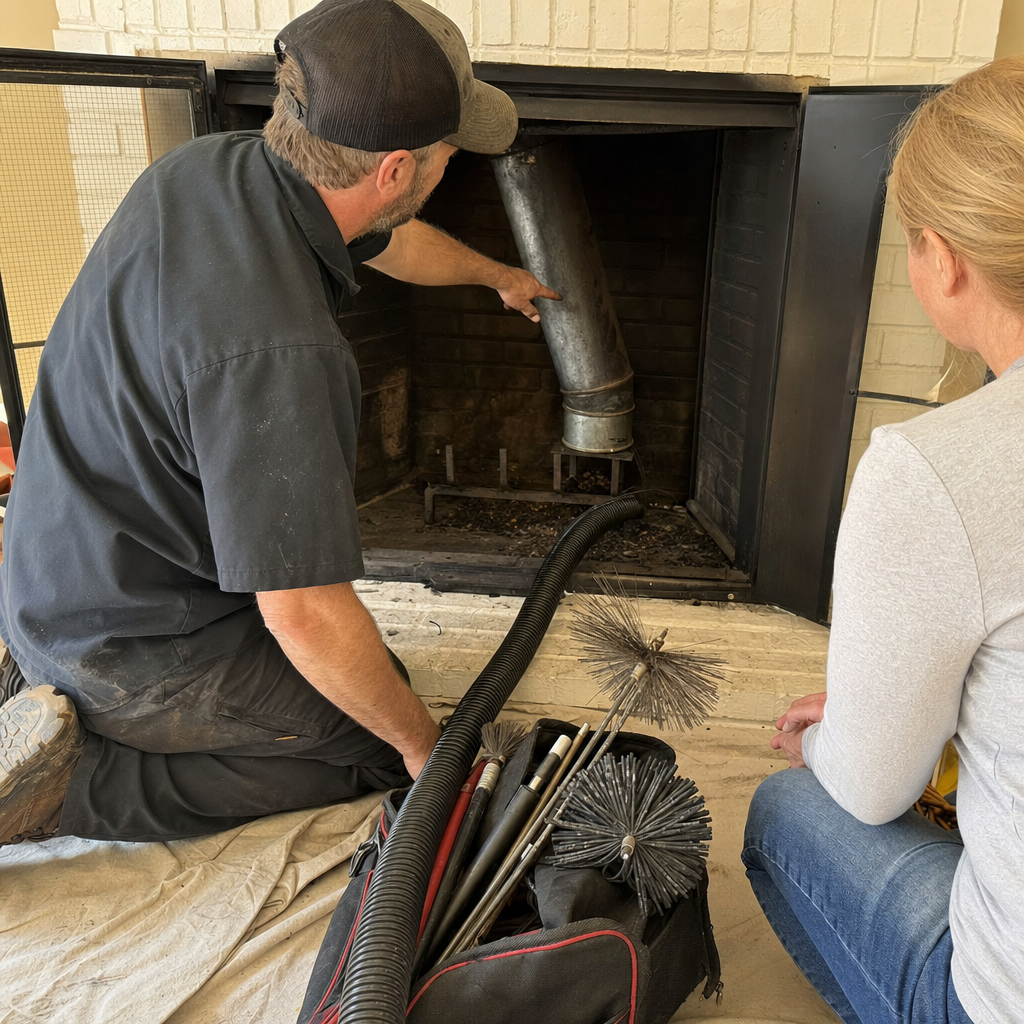
By the time smoke is backing into your living room, your chimney has been telling you for months that something was wrong. Richard Anderson, Owner and Lead Technician at Landmark Chimney Cleaning Service Tennessee, sees this pattern constantly across the homes he works on — particularly in older neighborhoods like those running through the Germantown corridor of Memphis, where he grew up and where he’s spent the better part of 14 years working on chimneys with original clay-tile flues and 1960s dampers that haven’t been serviced in a decade or more. The signs that matter most are the ones homeowners dismiss as “just the house being old.” Here’s what to actually watch for.
The Overlooked Early Signals That Matter Most
Every generic list online will tell you about black residue and smoke pouring back into the room. Those are late-stage problems. The earlier signals are subtler, and catching them saves you from the more expensive repairs that follow neglected maintenance.
That Campfire Smell When Nothing’s Burning
If you walk into your living room on a humid Tennessee afternoon and catch a whiff of last winter’s fires, that’s not normal. What you’re smelling is creosote off-gassing through hairline cracks in the flue liner or around the damper seal. Creosote is hygroscopic — it pulls moisture from our thick Tennessee air, especially during spring and summer when humidity climbs into the 70s and 80s. That moisture reactivates the volatile compounds in the buildup, and they find their way back into your house through the smallest gaps.
We’ve had homeowners in older Memphis-area homes tell us they thought the smell was “just old brick.” It’s not. It’s Stage 1 or Stage 2 creosote doing what it chemically wants to do: release gases. The smell is your chimney’s check-engine light.
Fires That Don’t Catch Like They Used To
A fire that’s harder to start than it was two or three years ago almost always points to restricted draft from buildup on the smoke shelf and upper flue. The physics are straightforward: your chimney draws because warm air rises through a column of cooler air. When that column is partially blocked by creosote deposits — particularly the puffy, tar-coated Stage 2 variety common in wood-burning fireplaces — the draft weakens. You find yourself building larger and larger teepees of kindling to get the same result.
In Tennessee, where plenty of homeowners burn seasoned hardwood from local suppliers, this shouldn’t happen if the flue is clean. Good fuel with poor draft means the flue is the problem, not the wood.
The Tacky Damper Handle
Open your damper and feel the handle. If it’s sticky, tacky, or leaves residue on your fingers, that’s condensed tar from creosote vapors that have settled on the damper plate and linkage. This is one of the most specific early indicators we know, and almost no homeowner checks for it until we show them.
The damper is the lowest point in the flue system where temperatures drop enough for vapors to condense. A tacky damper means the buildup above it is already significant. Richard handles this personally on every Chimney Cleaning & Sweep visit — it’s often the first thing he checks after a visual inspection because it tells him immediately what he’s likely to find higher up.
The Tennessee-Specific Sign: Your Smoke Detector’s New Sensitivity
Here’s one that catches homeowners completely off guard, and it’s particularly relevant in Tennessee’s housing stock. If your smoke detector triggers more easily during fires than it did two or three years ago — same detector, same batteries, same burning habits — that’s often a draft problem caused by partial flue blockage, not a faulty detector.
What happens is this: restricted draft causes more smoke and particulate to spill into the room at startup, before the flue fully heats and establishes its draw. Modern photoelectric detectors are sensitive to this transient smoke. The detector isn’t malfunctioning; it’s accurately reporting that your fireplace is producing more room-air contamination than it used to. We’ve had customers in neighborhoods from Midtown Memphis out to the older suburbs replace detectors twice before realizing the chimney was the actual culprit.
Before you buy another detector, have the flue inspected. The fix is usually a thorough sweep, not new electronics.
The Visual Test You Can Do Right Now
You don’t need our equipment to check one important indicator. Here’s what to do:
- Make sure the fire is completely out and the fireplace is cold.
- Open the damper fully.
- Hold a flashlight inside the firebox and look straight up at the smoke shelf — the flat surface above the damper where the firebox transitions to the flue.
What you see tells the story:
- Clean or properly maintained: You can see daylight at the top, or at minimum a flat, matte black surface with visible texture.
- Stage 2 creosote (needs cleaning soon): Dark, shiny, tar-coated surfaces that look like hardened syrup. This is still removable with standard sweeping.
- Stage 3 creosote (needs immediate attention):strong> Thick, hardened, glossy black deposits that look like melted plastic or obsidian. This is the dangerous stuff — it’s essentially fuel coating your flue, and it’s significantly harder to remove. In some cases, chemical treatment or mechanical removal is required.
If you can’t see daylight at all, or if what you see is dark and shiny rather than flat black, you’ve got actionable buildup. Don’t burn another fire until it’s addressed.
Wildlife Sounds: The Sign That Combines Two Problems
Scratching or chirping from your chimney during spring and early summer isn’t just nuisance noise. Birds, squirrels, and the occasional raccoon see an uncapped flue as ready-made shelter. What they leave behind — nesting material, droppings, and in unfortunate cases, deceased animals — creates organic debris that accelerates creosote adhesion and poses its own combustion risk when burning season returns.
Tennessee’s moderate winters mean some wildlife stays active longer into the season, and our spring storm patterns can damage or dislodge caps that were already marginal. Nest removal is standard during a cleaning visit, and it’s why we always inspect the cap and crown condition while we’re on the roof. If your cap is missing or damaged, we’ll show you exactly what’s needed — we install Gelco and Famco caps as part of our chimney cap and crown services, the same lines that certified chimney professionals spec nationwide.
The Sign That Looks Cosmetic But Isn’t: White Efflorescence
Of all the signs Richard Anderson has pointed out to Tennessee homeowners over 14 years, the one that catches people most off guard is white efflorescence — that powdery white or gray staining on the exterior brick face. People assume it’s cosmetic, maybe even “charming old house character.” It’s not.
Efflorescence is salt crystallization. Water is moving through your masonry regularly enough to dissolve mineral salts and deposit them on the surface as it evaporates. If water is moving through the brick and mortar that consistently, the interior condition is almost certainly worse than the exterior suggests. Inside, you’re likely looking at deteriorated mortar joints, compromised flue liners, and accelerated creosote adhesion on damp surfaces.
This is where our full-service capability matters. From your annual sweep to a full liner rebuild, Richard handles it personally — no rotating subcontractors, no passing you off to another company for the repair work. We use HeatShield for cerfractory flue resurfacing and DuraFlex for stainless liner installations when the original clay tile has failed. One call, one technician, one accountability chain.
How Often Should Tennessee Chimneys Actually Be Cleaned?
The NFPA 211 standard says chimneys should be inspected annually and cleaned as needed. “As needed” depends on use patterns that are common in Tennessee:
| Usage Pattern | Recommended Cleaning Frequency | Typical Cost Range in Tennessee |
|---|---|---|
| Primary heat source (wood-burning, 4+ nights/week) | Every 1–2 cords of wood burned, typically annually | $180–$280 |
| Supplemental use (1–2 fires/week in season) | Every 12–18 months | $180–$250 |
| Occasional use (holidays, special occasions) | Every 18–24 months, with annual inspection | $160–$220 |
| Gas fireplace (direct vent) | Annual inspection; cleaning every 2–3 years unless debris present | $140–$200 |
These ranges reflect what we see across the Tennessee market. Exact pricing depends on accessibility, flue condition, and whether additional services like cap repair or damper adjustment are needed. We’re happy to give you a firm number before any work begins — call (833) 753-1759 for a free estimate.
What Happens If You Ignore These Signs
The progression from “needs cleaning” to “needs major repair” follows a predictable path, and we’ve traced it on hundreds of Tennessee chimneys. Stage 2 creosote left in place hardens to Stage 3, which can’t be removed with standard brushes. The resulting restriction causes incomplete combustion, more creosote production, and hotter flue temperatures. Eventually, you get a chimney fire — often undetected, sometimes catastrophic — or pyrolysis of nearby combustibles that creates a long-term structural fire risk.
Water intrusion from failed crowns or deteriorated mortar accelerates everything. The freeze-thaw cycles we get in Tennessee winters, even mild ones, open small cracks into large ones. What would have been a $200 sweep becomes a $2,000 liner replacement or a $5,000+ rebuild.
364 homeowners have rated us 4.9 stars because we catch these transitions early and explain them honestly. If a flue only needs a cleaning, that’s all Richard will tell you. If it needs more, he’ll show you exactly why — with photos, with the flashlight in your own firebox, with whatever it takes for you to understand what you’re looking at before any work starts.
Key Takeaways: When to Call for a Chimney Cleaning
- Persistent campfire smell when not burning: Creosote off-gassing through cracks — schedule a sweep.
- Harder-to-start fires: Restricted draft from buildup — inspect before next use.
- Tacky or sticky damper handle: Condensed tar on the plate — definite cleaning needed.
- Smoke detector triggering more easily: Often draft spillage from partial blockage, not detector failure.
- Can’t see daylight up the flue, or see shiny black deposits: Stage 2 or 3 creosote present — professional removal required.
- Spring wildlife sounds from the chimney: Nesting debris creates dual hazard — remove before burning season.
- White efflorescence on exterior brick: Active water intrusion — interior likely worse than it appears.
A clean flue is a quiet flue — you shouldn’t have to think about it until next season. When any of these signs start demanding your attention, that’s your chimney telling you the quiet has been broken.
FAQs
A standard chimney sweep in Tennessee typically runs between $160 and $280 depending on usage level, flue accessibility, and whether the buildup requires standard brushing or more intensive removal methods. Gas fireplace cleanings usually fall at the lower end of that range, while wood-burning flues with significant Stage 2 or 3 creosote may run higher. Call (833) 753-1759 for an exact quote — estimates are free, and Richard will ask the right questions to give you a firm number before scheduling.
During peak season (September through January), we typically book 3–5 days out, though we maintain emergency slots for active chimney fires or dangerous conditions. In the off-season, same-week or same-day service is often available. If you’re seeing any of the warning signs above — especially tacky damper handles, visible shiny creosote, or smoke spillage — don’t wait for convenience. Call (833) 753-1759 and we’ll get you on the schedule as quickly as your situation warrants.
Resurfacing a sound but deteriorated clay tile flue with HeatShield cerfractory coating is typically 40–60% less expensive than a full stainless steel liner installation, but it only works when the original structure is intact. If tiles are missing, shifted, or severely cracked, DuraFlex stainless relining is the correct long-term solution — and attempting to patch a failed structure will cost more when it fails again. Richard assesses this personally on every job and will show you exactly what your flue looks like before recommending either path. Call (833) 753-1759 for an inspection and honest guidance on which approach fits your chimney’s actual condition.
A functioning chimney cap prevents water entry, blocks wildlife, and allows proper exhaust flow — if it’s intact, properly sized, and correctly installed. From the ground, look for visible damage: missing mesh sides, rust streaks on the masonry below, or a cap that sits crooked or loose. From inside, listen for wind noise that seems excessive (indicating a cap that’s missing or improperly vented) or check for water stains in the firebox after rain. We install Gelco and Famco caps that are spec’d for professional use — same materials the pros use, sized to your flue, and installed with proper clearance. If you’re unsure about yours, call (833) 753-1759 and we’ll inspect it during your cleaning or as a standalone service.
When You’re Ready to Have It Checked
If you’re noticing any of these signs — the smell, the sticky damper, the harder starts, the white staining on your brick — you don’t need to diagnose it yourself. Landmark Chimney Cleaning Service Tennessee offers straightforward, no-pressure assessments across Tennessee. Richard Anderson handles every evaluation personally, and if your chimney only needs a cleaning, that’s exactly what he’ll recommend. No upsells, no surprises, just 14 years of specialized experience applied to your flue. Call (833) 753-1759 to schedule your free estimate.
Written by Richard Anderson, Owner & Lead Technician at Landmark Chimney Cleaning Service Tennessee, serving Tennessee, TN.